What is the Currency of Malaysia? A Complete Guide
Malaysia is a diverse, multicultural country in Southeast Asia with its own official currency: the Malaysian Ringgit (MYR).
In this article, I’ll answer the most common questions travelers ask about money in Malaysia: what the Ringgit is called, how it’s written in Malay and English, what coins and banknotes look like, common abbreviations and symbols, and tips for handling cash while traveling here.
What is Malaysia’s Money Called?
The official currency is the Malaysian Ringgit, often abbreviated as RM or by its international code MYR.
The word ringgit literally means “jagged” in Malay, a reference to the serrated edges of Spanish silver dollars that circulated in the region centuries ago.
While you’ll see “Ringgit” used in formal contexts, locals often just say “RM” followed by the number, for example “RM10” instead of “10 Ringgit”.
In Malay
In Malay, the official language of Malaysia, the currency is written as Ringgit Malaysia. You’ll also often see the term sen (cents), which are subdivisions of the Ringgit.
- 1 Ringgit = 100 sen
- Prices in shops and restaurants are displayed as RM, not with a $ sign.
So if you see “RM5.50” on a menu, it simply means 5 Ringgit and 50 sen.
In English
English is widely spoken in Malaysia, especially in cities, airports, and tourist areas. In English, people say “Ringgit” or simply “RM”.
For example:
- “This taxi fare is RM20.”
- “The tour costs 150 Ringgit.”
Symbols and Abbreviations
Here’s what you need to know about how the Malaysian currency is written:
- RM is the most common way you’ll see prices listed (for example, RM25).
- MYR is the official currency code used internationally (on exchange sites, airport boards, etc.).
- The $ symbol is never used for Ringgit — that’s reserved for Singapore and US dollars.
Malaysian Ringgit Denominations
Coins
The coins you’ll most often see in Malaysia are:
- 5 sen
- 10 sen
- 20 sen
- 50 sen
1 sen coins technically exist, but they’re rare and hardly used anymore.
Banknotes
Malaysian banknotes come in these denominations:
- RM1 (blue)
- RM5 (green)
- RM10 (red)
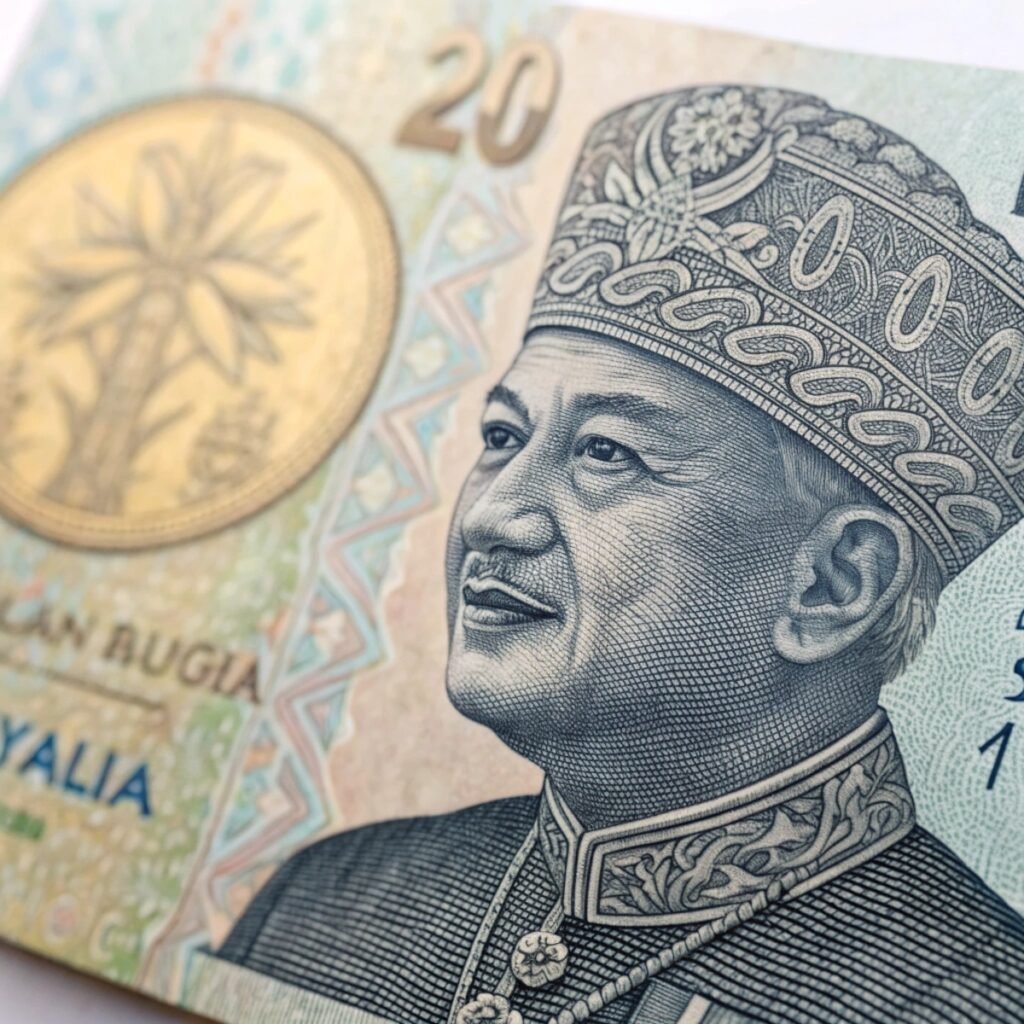
- RM20 (orange)
- RM50 (blue-green)
- RM100 (purple)
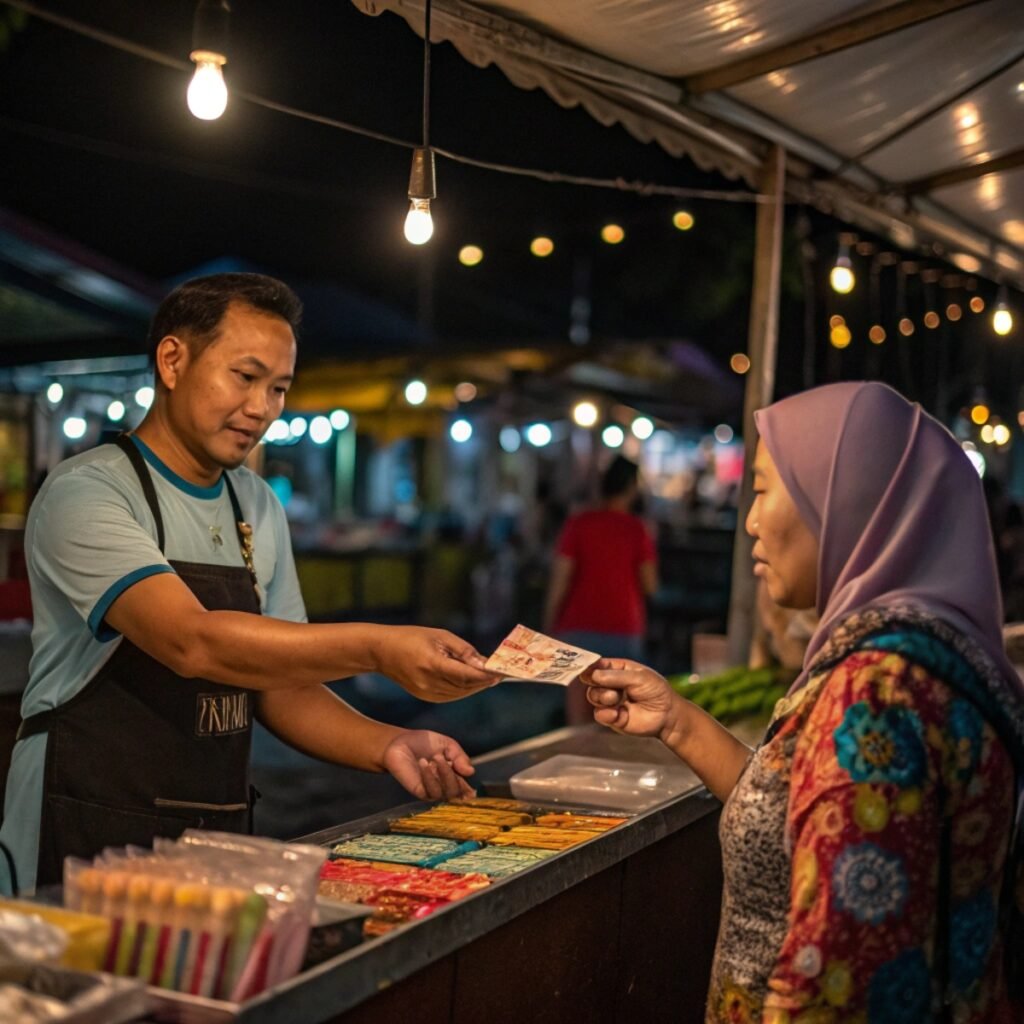
The smaller notes (RM1, RM5, RM10) are the ones you’ll use most for daily expenses like street food, taxis, and markets. RM50 and RM100 bills are common but can be tricky to use at hawker stalls or small shops — they might not have change.
What’s on Malaysia’s Coins and Bills?
- Coins: Feature hibiscus flowers (the national flower) and traditional Malaysian motifs.
- Banknotes: All banknotes feature the portrait of Malaysia’s first king, Tuanku Abdul Rahman, and colorful designs highlighting local culture, wildlife, and heritage.
For example:
- RM1 and RM5 highlight Malaysia’s natural environment.
- RM50 features Malaysia’s parliament and traditional kite (wau bulan).
- RM100 shows Mount Kinabalu and traditional batik patterns.
Exchange Rates for Malaysian Ringgit
Exchange rates change daily, but here’s a general idea of how the Ringgit compares:
- 1 USD ≈ RM4.5
- 1 EUR ≈ RM5.0
- 1 GBP ≈ RM5.8
- 1 SGD ≈ RM3.4
- 100 JPY ≈ RM3.0
(Pro Tip: Use apps like Wise or XE to check the latest rates before exchanging money.)
Tips for Handling Money in Malaysia
- Cash vs. card: Credit cards are widely accepted in malls, hotels, and restaurants, but many smaller shops, hawker stalls, and taxis prefer cash.
- ATMs: Easy to find in cities and airports. They dispense cash in RM50 or RM100 notes.
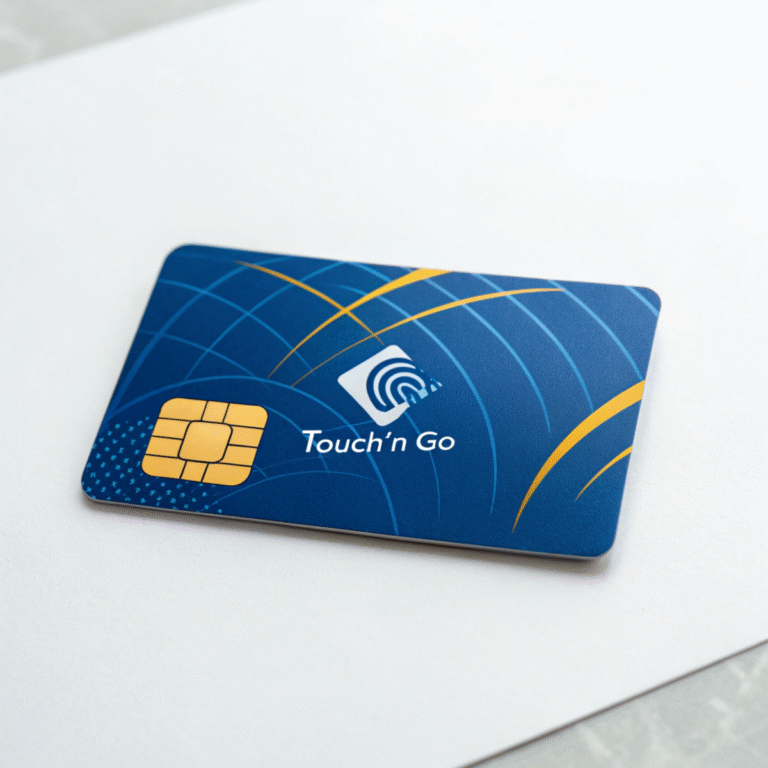
- E-wallets: Touch ‘n Go eWallet and GrabPay are increasingly popular for transport and small purchases.
- Carry small bills: Keep RM1, RM5, and RM10 notes for street food, markets, and tipping (when needed).
Final Thoughts on Malaysia’s Currency
So, what is Malaysia’s currency? It’s the Malaysian Ringgit (RM/MYR), colorful, practical, and easy to use.
With coins ranging from 5 to 50 sen, and bills from RM1 to RM100, you’ll get familiar with it quickly. Just remember to carry smaller notes for local markets and street food, while using cards or e-wallets for bigger transactions.
Whether you’re grabbing nasi lemak at a hawker stall, paying for a taxi, or checking into a hotel, handling money in Malaysia is straightforward once you know the basics.