The Most Common Malaysia Travel FAQs
Planning a trip to Malaysia? If you’re just getting started, this article will save you many hours of research. After helping countless travelers plan their Malaysia adventures, I’ve answered the same questions about Malaysia again and again. To make things easier, I’ve compiled this list of the most common questions and other Malaysia travel tips.

Before Your Trip FAQs
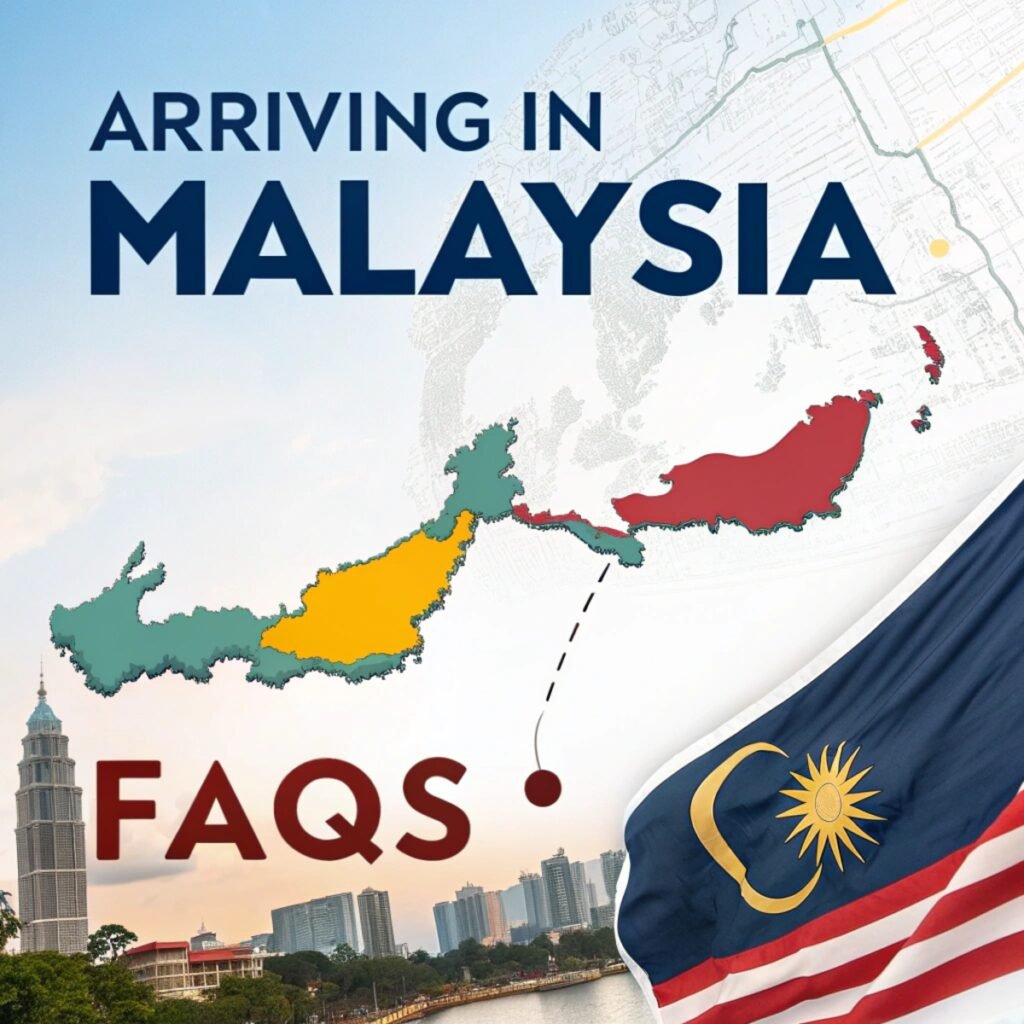
Malaysia is a Southeast Asian country split into two parts: Peninsular Malaysia (attached to Thailand) and Malaysian Borneo (sharing the island with Brunei and Indonesia). The country sits right on the equator, giving it a tropical climate year-round.
Kuala Lumpur is the capital and sits on the west coast of Peninsular Malaysia. The country is known for its incredible diversity – a mix of Malay, Chinese, Indian, and indigenous cultures all living together.
Many countries don’t need a visa for entering Malaysia for 14-90 days, depending on your passport. Most Western countries, including the US, UK, Canada, Australia, and most EU countries, get 90 days visa-free.
Some countries only get 30 days, while a few require a visa in advance. Check Malaysia’s immigration website for the most current info based on your nationality.
Because visa exemption is not a visa, it’s not possible to extend it without leaving Malaysia. If you want to stay longer, you’ll need to do a visa run to a neighboring country like Thailand or Singapore.
In terms of weather, the best time depends on which coast you’re visiting. The west coast (Penang, Langkawi) is best from December to March. The east coast (Perhentian Islands, Redang) is best from March to October – many resorts there actually close from November to February due to monsoon season.
For Kuala Lumpur and most inland areas, any time works, though it can rain heavily during monsoon season (November to February on the west coast, November to March on the east coast).
The busiest times are during Chinese New Year (January/February), school holidays (March, June, September, December), and the year-end holidays. Book hotels early during these periods.
For fully curated tours, I recommend checking out local operators on platforms like Viator or GetYourGuide, which offer everything from city tours to multi-day adventures.
For most travelers, I recommend exploring Kuala Lumpur on your own using the excellent public transport. Then take individual day tours (see below) or hire private drivers when heading to more remote areas like Cameron Highlands or Taman Negara.
Popular day tours include KL city tours, Batu Caves half-day trips, firefly watching in Kuala Selangor, and full-day trips to Melaka.
No vaccinations are officially required for entering Malaysia, though some are recommended. Most travelers should be up to date on routine vaccines like MMR, hepatitis A, and typhoid.
If you’re coming from a yellow fever endemic country, you’ll need to show proof of yellow fever vaccination. Malaria is only a risk in remote jungle areas of Borneo, so most travelers don’t need prophylaxis.
Check with your doctor or a travel clinic at least 4-6 weeks before your trip for personalized advice.
A good first-time itinerary for 10-14 days would be: 3 days in Kuala Lumpur, 2-3 days in Melaka, 2-3 days in Penang, and 2-3 days in Cameron Highlands or Langkawi.
If you have more time (2-3 weeks), add Malaysian Borneo with 3-4 days in Kota Kinabalu and 2-3 days in Kuching.
For a quick trip (5-7 days), stick to KL, Melaka, and either Penang or Cameron Highlands.
Below are some of the apps that I consider essential for traveling in Malaysia.
Google Maps: Essential for navigation, finding restaurants, checking reviews, and getting bus/train times. It’s very accurate in Malaysia.
Grab: This is Southeast Asia’s version of Uber. You’ll use this constantly for getting around. It’s cheaper than taxis and the drivers are reliable. You can also order food delivery with it.
Touch ‘n Go eWallet: For paying tolls, parking, and at many shops. Also works with the physical Touch ‘n Go card for trains and buses.
WhatsApp: Most commonly used messaging app in Malaysia. Many hotels and tour operators use it for communication.
Google Translate: Helpful for reading Malay signs or menus, though most signage in cities is in English too.
XE Currency: For checking exchange rates on the go.
English is widely spoken in Malaysia, especially in cities and tourist areas, so you can get by just fine without knowing Malay. However, learning a few basic phrases will get you smiles and better service!
Key phrases: “Terima kasih” (thank you), “Selamat pagi” (good morning), “Berapa harga?” (how much?), “Tidak pedas” (not spicy).
Apps like Duolingo, Pimsleur, or Babbel offer Malay courses if you want to learn more before your trip.
Arriving in Malaysia FAQs
KLIA (Kuala Lumpur International Airport) is efficient and modern. Most travelers get through immigration and customs in 30-45 minutes, though it can take up to an hour during busy times.
KLIA has two terminals: KLIA (Terminal 1) for full-service airlines and KLIA2 for budget airlines like AirAsia. Make sure you know which terminal you’re arriving at! They’re connected by a free train that takes 3 minutes.
The airport has plenty of food options, prayer rooms, sleeping pods, and even a jungle boardwalk between the terminals if you have time to kill.
You can buy a SIM card right at the airport from booths in the arrival hall, or at any convenience store or mobile phone shop in the city. The main providers are Maxis, Celcom, Digi, and U Mobile.
Tourist SIM packages usually range from 5-30 days with various data options. I recommend getting at least 20-30GB if you’ll be using maps and Grab frequently. Prices are very reasonable – usually around RM30-50 (USD 7-12) for a good tourist package.
Internet speed is excellent in Malaysia, especially in cities. You’ll have coverage almost everywhere except in remote jungle areas.
For most travelers, a SIM card is more convenient. You’ll need a local number for using Grab (the Uber equivalent), making restaurant reservations, and contacting your hotel.
WiFi devices are less common in Malaysia compared to other Asian countries. Most hotels, cafes, and restaurants have free WiFi anyway.
If you’re traveling as a couple or small group, you could get one SIM card and share the data via hotspot with other phones.
eSIMs are becoming popular in Malaysia. If you have a newer iPhone or compatible Android phone, this can be the easiest option. You can activate it before you even land.
Popular eSIM providers for Malaysia include Airalo, Holafly, and Nomad. They offer various data packages from 3-30 days.
The main downside is that most eSIMs don’t come with a local phone number, so you won’t be able to make calls. However, most communication can be done through WhatsApp anyway.
Touch ‘n Go is Malaysia’s most popular cashless payment system. It comes in two forms: a physical card and an eWallet app.
The physical card (RM10 deposit) can be used on trains (LRT, MRT, Monorail, KTM Komuter), buses, and some tolls. You can buy and reload it at any LRT/MRT station or convenience stores.
The Touch ‘n Go eWallet app is increasingly popular and can be used at many shops, restaurants, and for paying parking. However, you’ll need a Malaysian phone number to register, so get your SIM card first.
For most short-term tourists, just getting the physical card is easiest.
Malaysia is one of the most affordable countries in Southeast Asia. It’s cheaper than Singapore and Thailand’s tourist areas, but slightly more expensive than Vietnam or Indonesia.
Budget travelers can get by on USD 30-40 per day, mid-range travelers should budget USD 60-80 per day, and luxury travelers can expect to spend USD 150+ per day.
Food is incredibly cheap – you can get a delicious meal at a hawker center for RM5-10 (USD 1-2.50). Transportation is also very affordable, and budget hotels are plentiful.
Yes, you’ll definitely need cash in Malaysia, though not as much as in some other Asian countries. Many smaller food stalls, hawker centers, and shops only accept cash.
Credit cards are widely accepted at hotels, malls, chain restaurants, and convenience stores. However, some places add a 2-3% surcharge for credit cards.
The Touch ‘n Go eWallet is becoming more common, but you’ll still need cash for many situations. I recommend carrying at least RM200-300 in cash for daily expenses.
Withdrawing cash from an ATM once you arrive in Malaysia is the best option. There are ATMs everywhere – at the airport, in malls, outside banks, and at many convenience stores.
ATMs in Malaysia have a typical withdrawal limit of RM1,500-3,000 per transaction. Check your home bank’s international withdrawal limits before you go.
Try to use ATMs from major banks (Maybank, CIMB, Public Bank) as they tend to have better rates and fewer issues with foreign cards. Avoid the bright yellow currency exchange ATMs as they have terrible rates.
Consider getting a travel card like Wise for lower fees on ATM withdrawals and purchases abroad.
There are several luggage storage options in Malaysia. KLIA and KLIA2 both have left luggage services that charge by the day.
At KL Sentral (the main transport hub), there’s a luggage storage service on Level 1. Most major hotels will also store luggage for guests, even after checkout.
In popular tourist areas, you can also find private luggage storage services – just search “luggage storage” on Google Maps.
Malaysia Transportation FAQs
The fastest option is the KLIA Ekspres train (33 minutes to KL Sentral), which costs RM55 one-way. Trains run every 15-20 minutes from early morning to midnight. You can book tickets online for a small discount.
The KLIA Transit is slightly cheaper (RM55) but makes a few stops and takes about 40 minutes.
Buses to KL are cheaper (RM10-15) but take 60-90 minutes depending on traffic. They’re more useful if you’re going directly to areas like Chinatown or Bukit Bintang.
Grab (ride-hailing app) from the airport costs RM70-100 depending on your destination and traffic. It takes 45-75 minutes.
Taxis have a fixed-price coupon system at the airport (RM90-120 depending on destination). Buy the coupon at the taxi counter before going outside.
Kuala Lumpur has an extensive public transport system including LRT (Light Rail Transit), MRT (Mass Rapid Transit), Monorail, and KTM Komuter trains. They’re clean, air-conditioned, and cheap.
Download the Moovit or RapidKL app for route planning, or just use Google Maps, which is quite accurate.
Buy a Touch ‘n Go card for easy travel – just tap in and out like in other Asian cities.
Grab is perfect for when trains don’t go where you need to go, or for late-night travel. It’s very affordable – most trips within the city center cost RM10-20.
Walking between attractions can be challenging due to heat, humidity, and pedestrian infrastructure that isn’t always great. Many locals don’t walk much and rely on cars or Grab.
Buses are the most popular way to travel between cities in Peninsular Malaysia. Companies like Transnasional, Plusliner, and Konsortium run comfortable coaches between major cities. Book tickets online at BusOnlineTicket.com or RedBus.
Trains are limited in Malaysia. There’s no high-speed rail (yet), and the regular trains are slow and infrequent. The KTM ETS trains from KL to Ipoh and Penang are decent, but for most routes, buses are faster and more frequent.
Flights are cheap and fast for longer distances or getting to Malaysian Borneo. AirAsia, Malaysia Airlines, and Firefly have extensive domestic networks. It’s often worth flying to save time.
Ferries are necessary for getting to islands like Langkawi, Perhentian, Tioman, and others. Some can be rough during monsoon season.
Renting a car in Malaysia can be a good option if you want flexibility, especially for exploring Cameron Highlands, Melaka, or the east coast at your own pace.
Driving in Malaysia is fairly straightforward – they drive on the left (British style), roads are generally good, and traffic is manageable outside of KL rush hour. However, KL itself can be challenging to drive in with heavy traffic and confusing road systems.
Highway tolls are common and can add up. Most require Touch ‘n Go or PLUSMiles cards. GPS/Google Maps works well for navigation.
You’ll need an International Driving Permit (IDP) to rent a car in Malaysia. Rentals are affordable – around RM80-150 per day for a small car.
For travel within Peninsular Malaysia, buses are usually sufficient and more economical. However, if you’re short on time or hate long bus rides, flights can be worth it.
For getting to Malaysian Borneo (Sabah and Sarawak), flying is basically essential unless you have lots of time. The flight from KL to Kota Kinabalu takes 2.5 hours, while ferries would take days.
Langkawi can be reached by ferry from Penang or flight from KL. The flight is only 1 hour versus 3+ hours by ferry plus travel time to the ferry terminal.
AirAsia often has sales with domestic flights for RM100-200, so keep an eye out for deals.
More Malaysia Travel Tips and FAQs
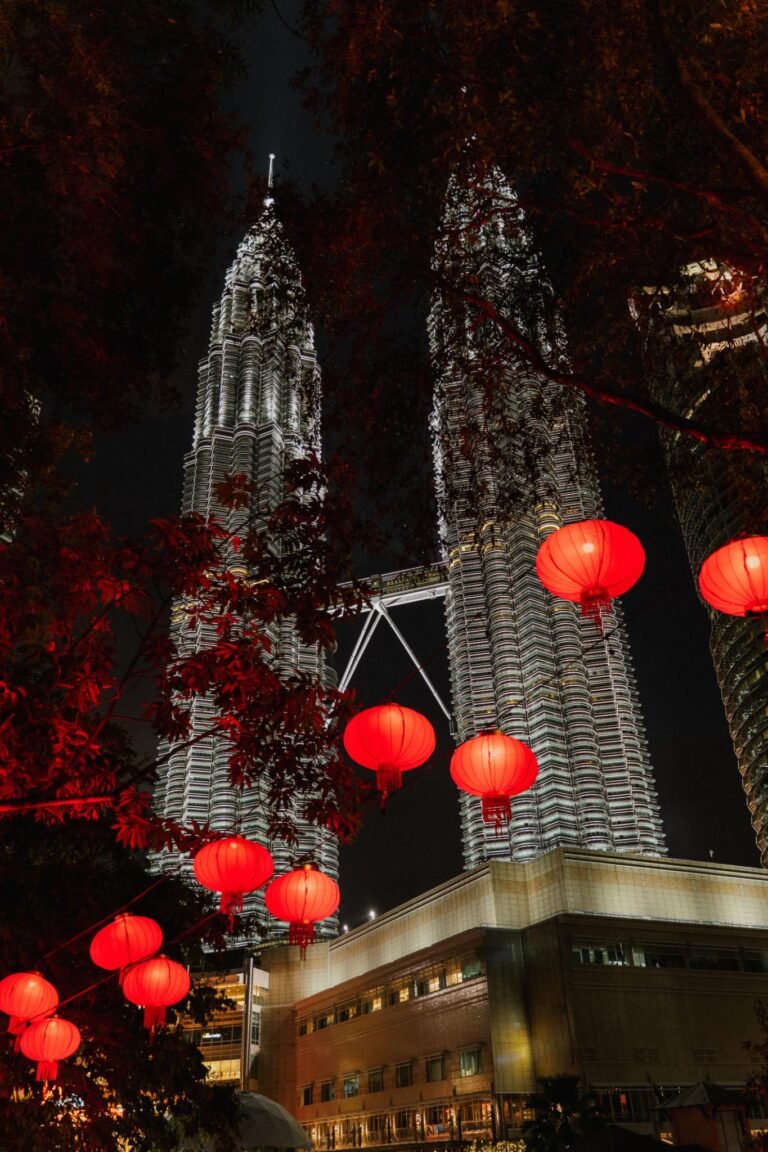
Top sights include the Petronas Twin Towers (book timed tickets in advance), Batu Caves (free Hindu temple in a limestone cave), KL Tower for city views, Merdeka Square for colonial architecture, and the colorful Thean Hou Temple.
Don’t miss Bukit Bintang for shopping and street food, Chinatown for markets, and KLCC Park for a relaxing walk with tower views.
Jalan Alor food street is a must for street food lovers. I recommend spending at least 2-3 full days exploring KL.
Bukit Bintang is the most popular area for tourists – centrally located with tons of shopping, restaurants, and nightlife. It’s well-connected by monorail.
KLCC (near Petronas Towers) is more upscale with luxury hotels and easy access to the park and Suria KLCC mall.
Chinatown has cheaper hotels and hostels, great for budget travelers who want to be in the thick of things.
KL Sentral area is convenient if you’re arriving/departing by train or want easy access to the airport express.
Avoid staying too far from public transport unless you’re happy using Grab constantly.
Ramadan is the Islamic holy month of fasting, and Malaysia observes it seriously (dates vary each year based on the lunar calendar). Muslims fast from sunrise to sunset, so many Malay restaurants close during the day.
However, this doesn’t affect tourists much! Chinese and Indian restaurants stay open as normal, and you’ll have no problem finding food. Food courts in malls also stay open.
The best part is experiencing Ramadan bazaars in the evenings – huge street markets with incredible food for breaking fast. They’re absolutely worth visiting!
Hotels and tourist areas operate normally. Just be respectful – avoid eating or drinking openly in front of people who are fasting, especially in more conservative areas.
For a comfortable pace, I’d recommend 2-3 days in Penang (enough time to explore George Town and try all the food), 2 days in Cameron Highlands (tea plantations, strawberry farms, hiking), and 1-2 days in Melaka (it’s a small city).
If you’re rushed, you could do each in 1-2 days, but you’ll miss a lot of the charm.
Penang deserves the most time – the food scene alone could keep you busy for days, plus there’s street art, beaches, temples, and museums.
Cameron Highlands is best as a relaxing 2-day break from the heat with cooler weather and scenic views.
Melaka is compact and perfect for a day trip from KL or an overnight stay.
Malaysia is very family-friendly! Kids love Sunway Lagoon (huge water and theme park near KL), Legoland Malaysia (in Johor near Singapore), and Aquaria KLCC (massive aquarium under the Petronas Towers).
Batu Caves is exciting for kids (though it’s a lot of steps), and many hotels have excellent pool facilities.
In Penang, the Entopia Butterfly Farm is magical, and in Sabah, kids love seeing orangutans at the Sepilok Rehabilitation Centre.
The KL Bird Park is one of the world’s largest walk-in aviaries and always a hit with families.
For malls, check out Pavilion KL (luxury brands), Suria KLCC (under Petronas Towers), Berjaya Times Square (huge and affordable), and Mid Valley Megamall (massive with everything).
Visit Central Market for handicrafts and souvenirs, Petaling Street in Chinatown for bargains, and Jalan Masjid India for textiles and Indian goods for markets
For electronics, head to Low Yat Plaza or Plaza Imbi in Bukit Bintang.
For local products and snacks to take home, go to any big supermarket or the airport has good selections.
Jalan Alor in Bukit Bintang is the most famous food street with dozens of stalls serving everything from grilled seafood to noodles.
Hutong Food Court in Lot 10 mall brings together some of KL’s most famous street food vendors under one air-conditioned roof – perfect if you don’t like the heat.
Madras Lane has incredible hokkien mee, and Tengkat Tong Shin has great local food stalls.
In Penang, Gurney Drive Hawker Centre and the hawkers on Chulia Street are legendary.
Food courts in malls are everywhere and offer very affordable meals – usually RM8-15 for a full meal.
This is tough because KL has thousands of great restaurants! For traditional Malay food, try Enak KL or Bijan.
Head to Precious Old China or Limapulo for Peranakan (Nyonya) cuisine
For Chinese roast duck, Soek Seng 1954 is incredible, and for dim sum, Din Tai Fung has several locations (though there’s always a wait).
Nasi kandar (Malaysian Indian Muslim food) is a must-try – Pelita or Kayu are open 24 hours.
For something upscale, Madam Kwan’s does excellent Malaysian classics in a nice setting.
Mamak stalls (Indian Muslim restaurants) are everywhere and serve cheap, delicious roti canai, teh tarik, and nasi lemak 24/7.
Melaka (2 hours south) is the most popular day trip – a historic city with colonial architecture, great food, and museums.
Batu Caves (30 minutes) is a must-see with its giant golden statue and 272 colorful steps leading to Hindu temples in limestone caves.
Genting Highlands (1 hour) offers cool mountain air, casinos, theme parks, and entertainment.
Kuala Selangor (1 hour) is famous for firefly boat tours and fresh seafood.
Putrajaya (30 minutes) is Malaysia’s administrative capital with impressive modern Islamic architecture and a pink mosque.
Unlike some developing countries, Malaysia is quite modern, so you don’t need to bring basic items or medicine.
If you’re visiting Malaysian friends or family, the most appreciated gift is a specialty food item or famous snack from your country. Malaysians are food-obsessed and love trying new things! Just avoid pork products if giving to Muslim friends.
Other good options include chocolates from your country (but not too sweet), branded coffee or tea, or small souvenirs representing your hometown.
For formal occasions like weddings, cash in a decorated envelope is appropriate and expected. The amount depends on your relationship – RM100-300 is common.
Do:
Remove your shoes before entering homes, temples, and some shops
Use your right hand for giving, receiving, eating, or gesturing (left hand is considered unclean)
Dress modestly when visiting mosques or temples – shoulders and knees covered
Ask before taking photos of people, especially in more traditional areas
Try to learn a few words of Malay – locals really appreciate it
Don’t:
Touch anyone’s head (it’s considered the most sacred part of the body)
Point with your index finger – use your thumb or whole hand instead
Show the bottom of your feet or point them at people
Be overly affectionate in public – keep PDA minimal, especially in more conservative areas
Eat or drink in public during daylight hours in Ramadan if you’re in a Malay area
Disrespect Islam or make jokes about religion
Refuse food or drink when offered by locals – at least accept and have a small taste
Litter or eat/drink on the LRT/MRT (there are fines)
Malaysia is generally very safe for travelers. Violent crime against tourists is rare, though petty theft like pickpocketing can happen in crowded areas like markets or on busy public transport.
Solo female travelers consistently report feeling safe in Malaysia. Women travel alone here all the time without major issues. Standard precautions apply – avoid walking alone late at night in quiet areas, watch your drink, and be aware of your surroundings.
KL is a modern, diverse city where you’ll see locals dressed in everything from headscarves to shorts. However, more conservative dress is appreciated in rural areas and when visiting religious sites.
Scams are not as common as in some neighboring countries, but be cautious of anyone offering deals that seem too good to be true.
The tap water is technically safe in major cities but most visitors and even locals drink bottled or filtered water to be safe.
Traffic is probably the biggest danger – be very careful crossing streets as cars don’t always stop for pedestrians!